Klause Schwab is this you?
1 Like
You’re suggesting we save a man being crushed by rocks by piling more rocks on. When I suggested removing rocks instead, your response was “maybe we should add different shaped rocks. I’ll research what shapes of rocks we can add to the pile that might save him.”
The man will die unless the rocks are removed. No amount of cleverness will change that. It’s a matter of physics.
You will not solve it because you cannot solve it. It can’t be “solved.” “Methods” can’t be “built” that will do anything but damage. The solution is clear and simple: the only way to shrink the debt is to spend, tax, and regulate less. That’s all.
Debates can be had about the details—there are lots of good ways to remove rocks from a pile—but the solution is in the directon of undoing. Solutions that are in the direction of doing will only make it worse because that’s all they can do.
The curious task of economics is to demonstrate to men how little they really know about what they imagine they can design.
1 Like
Didn’t he resign? Also, I dont like to eat ze bugs.
Surely there is strategy. This is the strategy I initially came up with. If you think I’m going to listen to you and consider your nonsense, then thats a negaive. I will keep improving until I have a great solution that people think is considerable. In fact, you should be coning up with your own strategy. Maybe we can both come up with creative solutions to this complex puzzle and laugh at the dumb ideas and steal the good ones.
Yes, off topic.
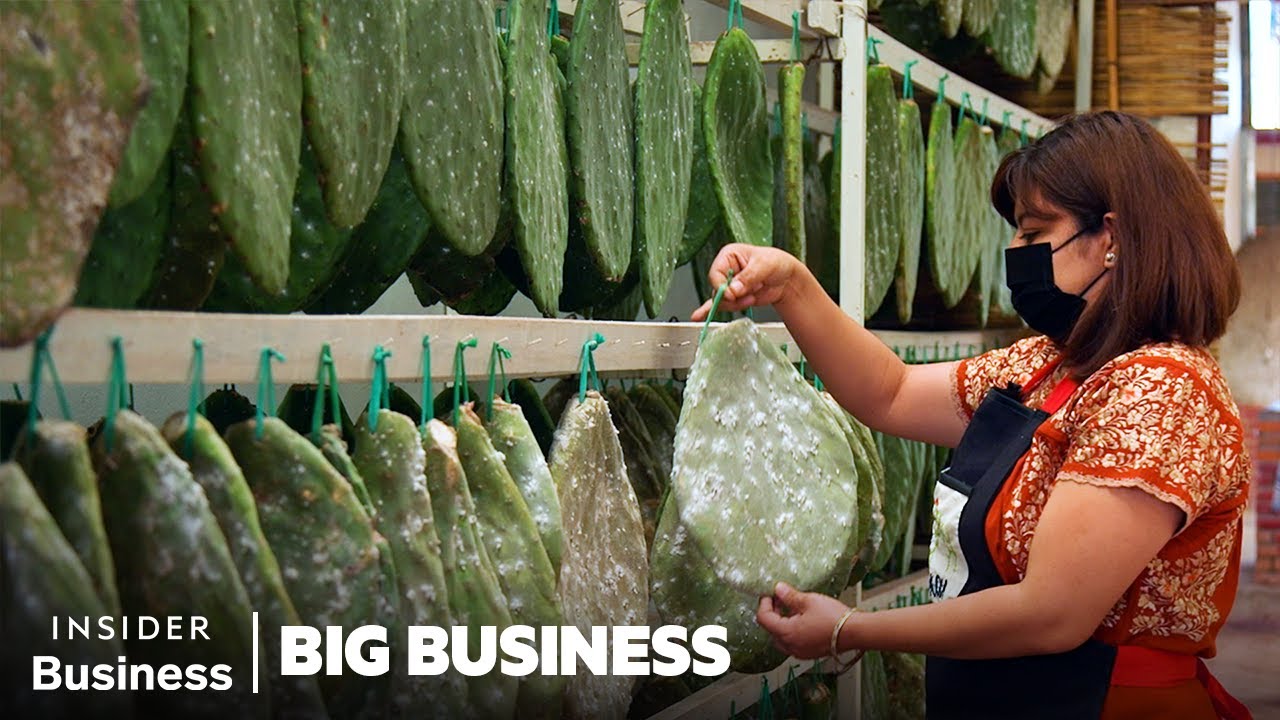
Wait a minute, did you know you are probably eating bugs now? Where does Red #4 come from, and it is not one of the petroleum based dyes RFK Jr. is trying to ban.


1 Like
You’re knee deep in nonsense. I’m trying to pull you out of it, and you’re sitting in the mud with your arms crossed because you don’t like my tone.
If you want strategy, here are some creative ideas:
-End the fed
-Constitutional amendment protecting freedom of currency: trade, no matter the currency or commodity, is expression of a person’s values, and now receives 1st amendment protection
-Shift 100% of federal taxes to a consumer-level (not b2b) consumption tax on new goods & services only, with a prebate to every legal resident head of household untaxing them up to the poverty line, with a requirement to show the total tax transparently on every receipt & abolish the 16th amendment
-Separation of school and state
-Balanced budget amendment
-Amendment and/or legislation that re-levels the informal tiering of different constitutional rights, ends tiers of scrutiny, clarifies economic activity is justiciable and equal to private activity and must receive equal constitutional protection, and formally enshrine the Jeffersonian view of the limits of the federal government’s powers and protection of unenumerated rights
-End qualified and unqualified immunity. Ubi jus, ibi remedium amendment & supporting legislation. Criminal penalties for government employees who violate a person’s constitutional rights.
-Restrict eminent domain until it’s virtually extinct
-Repeal zoning & most of most building codes. The zeitgeist is finally inching, very slowly, in this direction. But it could be faster
-Transfer non-critical federal land to the states, and strongly encourage them to sell it, allowing it to flow to its most valuable and productive uses
-Amendment recognizing self-medicating as a human right, ending the war on drugs and deregulating medicine
-Repeal most regulations & criminal law across the country. But vigorously prosecute real crime with real victims, including & especially when committed inside or on behalf of businesses. “Do what you want, but don’t you dare hurt or defraud someone. Or else.” End plea bargaining & restore the jury trial to its rightful role as a check & balance.
This only scratches the surface, and some of these would address the debt directly & swiftly more than others. Some have enormous power hidden in their second+ order effects: #6 prevents the govt from screwing with the economy in general; #3 would make the us the world’s largest tax haven, reshore billions or trillions, and bring a tsunami of investment; #1+2+5+6 ensures it doesn’t become a bubble; #12 would hurt the cartels making Americans safer, fully legalize harm reduction making Americans safer, start a gradual process of recreational drugs becoming safer and milder making Americans safer, and unleash rapid medical innovation and decreasing prices, making…; #3 + #13 would, among other things, enable lots of safe, cheap nuclear power to come online quickly: energy is wealth. Even a few of these would move the needle. There are many more
Yup, already knew that. Thanks for the video. I also know that blue 1 is a petroleum-based product.
1 Like
Thank you for the reply and long response. I curiously ran the plan through AI to see what it had to say using your methods. Apparently this will take 15 to 20 years. Im trying to do this with 4 years (one presidential term; im aware mining asteoids will take longer).
Maybe a good idea could be to add to your idea is to have some sort of account for the government that generates interest. The use of compound interest to pay down the debt much more soon could be part of your strategy. Eitherbthat or exploring accounts that already have substantial compounded interest could be a good idea.
Here is my reference from Grok AI:
“Implementing the proposed strategies—such as ending the Federal Reserve, shifting to a consumption-based tax with a prebate, enacting a balanced budget amendment, and repealing regulations to spur economic growth—could significantly accelerate paying down the U.S. national debt, currently around $33 trillion. By making the U.S. a tax haven through the consumption tax and abolishing the 16th amendment, alongside freeing economic activity via deregulation and constitutional protections for currency and trade, the plan could attract trillions in investment and reshore capital, potentially boosting GDP growth to 4-6% annually. A balanced budget amendment would curb deficit spending, while transferring federal land to states for productive use and legalizing self-medication to cut healthcare costs could further stimulate wealth creation. Assuming aggressive implementation of the most impactful measures (e.g., tax reform, deregulation, and land sales) starting in 2026, and factoring in second-order effects like increased energy production from deregulated nuclear power, the U.S. could reach a balanced budget within 5-7 years and pay off the debt in 15-20 years, provided political will sustains the reforms and global economic conditions remain stable.”
I definilty see methods of a viable strategy. I assume ‘ending the fed’ means removing the deep state or reserve or something. But, I appreciate the extensive contribution.
It’s impossible to give any credibility to a plan to reduce the national debt that starts with printing money; so I read no futher before commenting. I will read the entire post, but with a jaundiced eye and skeptical opinion.
There is no circumstance in which printing money does not lead to inflation; therefore, printing money will only worsen the debt crisis.
Have you ever seriously studied economics? . . . or history?
=============================
I read the whole thing. It’s stupid beyond description. It is utterly without supporting information for claims and smacks of a delusional acid trip.
My guess is that you are very young and very naive. Most of what you propose has no merit or is based on such wild hypotheses for success as to be ludicrous.
I suggest you get back on your meds and get out of your parents basement and find a job.
Admins: I thought this was a forum for serious discussion.
2 Likes
Offer your own solutions. I offered mine, as naive as it seems. I think there is a legitimate strategy by printing and spending just a bit more to grow small businesses and other strategic ideas if it means paying off the debt more soon. I mean sure printing more is a bad idea, it causes more inflation, and seems socialistic, but i think it can be part of a greater strategy as long as it’s kept within reason and has a positive outcome.
You’re relying on AI to think and write for you way too much. The tech is improving but its projections are dubious at best, and where serious math is involved, like macroeconomic forecasting, it’s still likely to be more wrong than right. Depending on which Grok mode or model you’re using and how you’re prompting it, it may not be doing any math at all. In general AI also tends to yes-and, so even when you ask it to critique, it’s still going to follow your lead in general. It’s very easy to accidentally get it to agree that your idea is better than the other guy’s, whether it really is or not. Your original post is exhibit A. So it sounds reasonable on the surface, but I don’t trust its 10-20 year estimate and neither should you.
The fed is common shorthand for the federal reserve. “End the fed” has been a slogan since the late aughts.
An account with whom, for what, and by what method will it generate interest?
Outside of government, fractional reserve banking helps fund productive activity that grows the economy, and some of that extra grownh comes back to the bank as interest. In other words, it’s economic growth that generates the interest in a savings account.
The government needs to get all the way out of banking, not screwing with the economy more by offering loans (there have been some fights over public banking ideas just in the last few years. Sanity is winning so far, just barely. There’s lots to read about it on both sides of the debate). For the purposes of reducing the debt, it’s a nonstarter. The next option is making one or more accounts with one or more banks or institutions and, which I don’t completely hate, but I feel like it’s extra steps, middle men, and potential for distortion than necessary; simple is almost always better. I’ll have to think about it
I could write a few paragraphs about why stocks or other assets aren’t the answer either, but this is enough for now, and it’s a good opportunity to practice thinking through 2nd+ order effects yourself
“Adding more rocks on top of this guy who’s being crushed by rocks is a bad idea, he’ll die faster, and seems sadistic, but think it can be part of a greater strategy as long as it’s kept within reason and has a positive outcome.”
No. No it can’t.
1 Like
Fair enough. I’m still working on new ideas and giving the whole idea some new thoughts when i have the luxery of time. Trying to compress the time frame to four to five years is the big challenge. All it takes is deepstate politician types to get in, and the whole country crumbles like a deck of cards. That’s why i feel paying off the debt has to be fast.
You’re not wrong about entrenched interests and busybodies, but I’d argue getting on the right trajectory, even if it’s not that steep, but making the changes permanent and resilient to tampering, within an administration is more important than paying off the debt in that time. What’s better, getting the ship moving reliably in the right direction, enough to avoid the iceberg, with safeguards against steering off track; or getting all the way to the destination really fast with no protection against popping right back to where we are now with a vengeance?
I think both methods are worth considering. What we need is a way to test these ideas to create a working model and hopefully it leads to desirable or more favorable outcome.
Now you just sound like a standard-issue bureaucrat the likes of which Trump was elected to get rid of.
Dont care MK-Ultra. America needs solutions! You should also be offering your own solutions. Lol
Now you’re just being a troll.
2 Likes
Sorry, you have some great ideas that don’t actually translate in the real world. Did you ever ask yourself or AI why we can’t simply print money and simply pay off the debt instead of bonding it? It is because there is no collateral. This is where your sovereign wealth idea comes in. You can imo print any amount of money interest free if you purchase assets rather than giving it away. Currently it has cost $1.25 to raise GDP by $1.00. Your ideas will be more of the same. Think NET DEBT SPENDING. We will have to increase electrical output by $500B by 2030 and $1.5T by 2050. Private entities do not have the capital to do that but printing money does. in this senario the gov’t hires $1.5T in solar development for 15 years. The gov’t owns the solar fields AND the revenue from it. A 30 year field usually pays for itself in 10 yrs. or less. The original investment plus the earnings go into the sovereign wealth fund. In10 yrs. you will have accumulated $10TRILLION or net debt now $27T. and going down with additional imput and rising revenue. The dollars have been laundered through the economy in terms of construction, mgmt. distribution processes and is now clean cash that can literally be used to down the debt or reinvestment. Now apply this to other things. Nuclear, updated refineries and real agriculture come first to mind. Now use agrivoltaics to actually grow the food of which you speak to offset SNAP or other export or domestic use. We don’t grow food in this country. 4.4M acres of vegetables GDP $26B vs. 100M acres of corn GDP $86B, 40% of which goes into your gastank, creates pollution, lowers gas mileage, loses farmers money as does corn and soybeans, and generates a carbon footprint greater than ethanol absolves. We can however print money for other asset purchases that may or may not produce revenue. The strategic petroleum reserve has a value. Put that in the fund. Offset the debt. It needs to be refilled. Print the money and fill it. Offset the debt further. Need and aircraft carrier or 20 F-35’s? Don’t borrow it. Print the money and
Computer blew up lol. Simply print the money and buy these things. They may depreciate but the money was free. National lands?? Put the value of the leases in the fund. All these empty govt buildings have a value. Put them in the fund until sold or leased and put the cash in the fund. Any part of current spending that has value (purchases) can be taken out of the current budget and be paid for in this manner. You can print money that can be loaned to states for some of your projects. The bonds are an asset that goes into the fund. Basically you are using “free” money to create a giant mutual fund of tangible assets that will ultimately exceed $37T. You cannot grow the economy without borrowing. The money has to come from someplace. A $1T trade surplus would help but can’t happen. This way you can set growth at any rate. Saudia Arabia’s Sovereign Wealth Fund owns the oil and manages it to pay the bills for the country. The people pay NO taxes. There are many possibilities here. We fundamentally agree on what needs to be done, just not how to do it. I believe in balance sheets. In a perfect world you would end up with little to no debt and $50T in cash. We and perhaps China are the only countries with unlimited cash resources to be able to do this because we are the biggest consumers. We should not be importing most vegetables, grains, beef, pork, chickens, eggs, etc. etc. but we are too the tune of $200B+. Today in fact I just bought 2 big, thick, beautiful NY Strips that were made in BRAZIL FOR HALF PRICE!! We are having steak tomorrow and if they are as good as they look unfortunately…I’m buying MORE! I do however buy alot of farm direct. Thanks for the list of new ideas. Best Wishes.